What are Irish businesses doing to build resilience and sustain competitiveness?
Irish businesses are taking a broad but practical approach to sustainability, with their plans showing a mix of environmental, operational, and people-focused initiatives – that will help to build resilience in the face of a changing climate. Analysis of action plans from the Skillnet Climate Ready Academy’s Sustainability Leaders Programme (SLP) suggests that these actions are not random or symbolic; rather, they are shaped by clear business drivers and often linked to measurable outcomes. The main types of actions are as follows:
Reducing consumption is the most common action type:
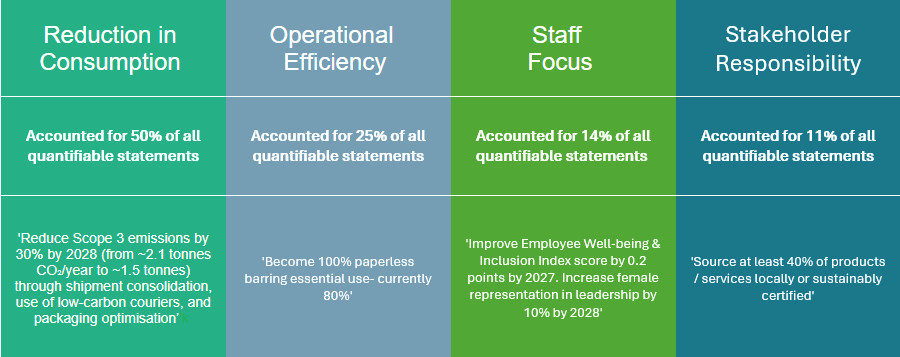
Actions aimed at reducing consumption are the most common type among the programme participants, with 50% of quantifiable action targets falling into this category. These actions focus on reducing (or conserving) the use of electricity, transport, materials, waste, or other inputs, often with the added effect of lowering emissions and carbon footprint. One example provided is a commitment to Developing sustainable packaging guidelines, with the aim of a 10% reduction in packaging volume per unit. Actions such as this suggest that many Irish businesses are beginning with practical and achievable steps that improve efficiency, reduce waste and improve environmental performance at the same time.
Operational efficiency and innovation are also major priorities:
Another significant focus is on improving operations. Analysis from the SLP action plans found that 25% of measurable targets are focused on operational efficiency, including product changes, internal process improvements, and innovation. These are actions that make sustainability part of how the business functions day to day rather than treating it as a separate agenda. One example identified is to upgrade all refrigeration systems to more energy-efficient models, and an accompanying target of 15% energy savings. This kind of action demonstrates how businesses are embedding sustainability into systems and workflows, often in innovative ways that can also improve efficiency and reduce costs.
Staff and stakeholder-focused actions are also being taken:
Finally, the acknowledgment that sustainable consumption and process efficiency isn’t achievable without driven and knowledgeable people is also apparent in the analysis. Staff training and a responsibility towards stakeholders are a focus of 25% of actions, in areas related to employee well-being, inclusion, education, supply chains, and community engagement. Specific actions include sustainability training for 50% of staff by the end of 2026 and a commitment to sourcing at least 40% of products or services locally or through sustainable certification. These actions show that Irish businesses are increasingly treating sustainability as a broader organisational responsibility that includes people, governance, and external relationships.
Conclusion:
As evident above, Irish businesses are taking a balanced, holistic, and increasingly measurable approach to sustainability. The most common actions focus on reducing consumption, but a substantial share also target operational efficiency, staff well-being, and stakeholder responsibility. Taken together, these findings suggest that sustainable action in Irish businesses is becoming more integrated, practical, and accountable. Rather than focusing only on broad ambition, many organisations are using action plans to define specific changes that can improve business performance while also advancing environmental and social goals.